Porcelain vs Quartz Countertops: Jacksonville Kitchen Guide
Both porcelain and quartz countertops are excellent engineered materials that outperform natural stone in many applications — the right choice depends on your lifestyle, budget, and how you use your kitchen. As a fabricator who templates, cuts, and installs both materials daily in Jacksonville homes, I see homeowners struggle with this decision because marketing claims overlap and pricing varies widely. This guide breaks down the real-world differences so you can choose confidently.
What Is the Main Difference Between Porcelain and Quartz Countertops?
Porcelain slabs are made from clay and natural minerals fired at temperatures exceeding 2200°F, while quartz countertops consist of 90-95% ground quartz bound with polymer resins.[1] This manufacturing difference drives every performance variation between the two materials. Porcelain’s firing process creates a completely inert surface with zero porosity, making it impervious to stains, UV damage, and heat. Quartz’s resin binder delivers greater impact resistance and easier fabrication but limits heat tolerance to around 300°F and makes the surface vulnerable to direct sunlight in outdoor applications.[2]
In Jacksonville kitchens, both materials perform exceptionally well for typical indoor use. I recommend porcelain when clients plan outdoor kitchens (common in Ponte Vedra and Nocatee), need to place hot pans directly on the surface, or have large south-facing windows that flood counters with UV exposure. Quartz makes more sense when homeowners prioritize seamless appearance, want the widest color selection, or prefer a slightly softer surface that’s easier on dropped glassware.
How Do Porcelain and Quartz Countertops Compare in Cost?
Quartz countertops typically cost $60-$120 per square foot installed in Jacksonville, while porcelain ranges from $70-$140 per square foot installed, with premium large-format porcelain slabs reaching $150-$180.[3] The price overlap confuses many homeowners because both materials span budget-friendly to luxury tiers. Entry-level quartz from Silestone or Cambria starts around $60 installed, while basic porcelain from brands like Dekton or Laminam begins near $70. At the high end, exotic quartz patterns with heavy veining cost $100-$120, and ultra-thin 6mm porcelain or book-matched slabs push past $150.
Fabrication complexity drives much of porcelain’s cost premium. Porcelain requires diamond blades rated for ceramic, specialized cutting equipment, and more careful handling due to its brittleness before installation. For a standard 30-square-foot kitchen with an island, expect to pay $1,800-$3,600 for mid-grade quartz or $2,100-$4,200 for comparable porcelain. If you’re working with a custom kitchen design that includes waterfall edges or complex cutouts, add 15-20% to either estimate.
| Feature | Porcelain | Quartz |
|---|---|---|
| Cost (Installed) | $70-$140/sq ft | $60-$120/sq ft |
| Heat Resistance | 2200°F+ (direct pan placement safe) | ~300°F (trivets required) |
| UV Resistance | Complete (outdoor-safe) | Limited (indoor only) |
| Stain Resistance | 100% non-porous | Highly stain-resistant |
| Maintenance | Soap and water only | Mild cleaner, avoid bleach |
| Best For | Outdoor kitchens, high-heat cooking, UV exposure | Indoor kitchens, wide color selection, lower cost |
Which Material Resists Heat and Stains Better?
Porcelain countertops resist heat up to 2200°F and are completely stain-proof due to zero porosity, while quartz resists most stains but can scorch or discolor above 300°F.[4] In ten years of fabricating countertops in Jacksonville, I’ve never seen a porcelain slab damaged by a hot pan, red wine, or turmeric — the material is chemically inert and won’t absorb anything. Quartz performs admirably for typical kitchen use, but I’ve repaired several quartz counters scorched by slow cookers placed directly on the surface or cast-iron skillets moved from stovetop to counter without a trivet.
For stain resistance, both materials exceed granite and marble. Quartz’s resin binder can discolor if exposed to concentrated bleach, acetone, or permanent markers left to sit, but daily spills from coffee, wine, or cooking oil wipe away with no trace. Porcelain’s ceramic composition makes it immune to every household chemical, including paint stripper and drain cleaner. If you’re an avid home cook who uses your counters as a staging area for hot cookware, porcelain’s heat tolerance provides meaningful peace of mind that quartz cannot match.
Can Porcelain and Quartz Countertops Be Used Outdoors in Jacksonville?
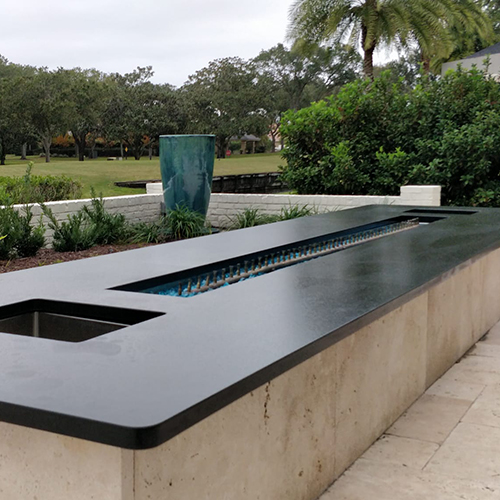
Porcelain countertops perform flawlessly in outdoor kitchens and withstand Jacksonville’s intense UV exposure, humidity, and temperature swings, while quartz will fade, discolor, and potentially delaminate outdoors.[5] Florida’s subtropical climate is particularly brutal on resin-based materials — the polymer binder in quartz breaks down under sustained UV exposure, causing yellowing in white quartz and color shifts in darker slabs. I’ve installed dozens of outdoor kitchens in Riverside, San Marco, and Ponte Vedra Beach using porcelain with zero warranty claims related to sun damage.
Porcelain’s UV stability makes it the only engineered surface I recommend for outdoor applications in Northeast Florida. The material won’t fade, crack, or warp through summer heat or winter cold snaps. If you’re planning an outdoor kitchen renovation with a built-in grill and bar seating, porcelain adds $20-$30 per square foot over quartz but eliminates the risk of premature failure. For covered patios with limited direct sunlight, quartz remains an option, but any installation receiving more than two hours of daily sun exposure should use porcelain.
How Do Maintenance Requirements Compare?
Both porcelain and quartz require only soap and water for daily cleaning, but porcelain tolerates any cleaning chemical without damage while quartz requires pH-neutral cleaners to avoid dulling the resin binder.[6] I tell clients that porcelain is the most carefree countertop material available — you can scrub it with abrasive pads, spray it with any cleaner, and never worry about etching or discoloration. Quartz needs slightly more consideration: avoid acidic cleaners like vinegar or lemon-based products, skip abrasive scrubbers that can dull the polish, and immediately wipe up substances like nail polish remover or hair dye that can penetrate the resin.
Neither material requires sealing, which gives both a significant maintenance advantage over granite or marble. For busy Jacksonville families, the practical difference is minimal — a microfiber cloth and dish soap handle 99% of daily messes on both surfaces. Porcelain’s extra chemical resistance matters most in bathroom applications where harsh cleaners are common, or in households with young children where unexpected spills (paint, glue, markers) occur frequently.
Which Material Offers Better Design Flexibility?
Quartz provides wider color selection and more consistent patterning with 200+ colors available, while porcelain offers larger slab sizes (up to 10 feet by 5 feet) and thinner profiles (6mm-12mm) for dramatic waterfall edges and seamless installations.[7] Most homeowners prioritize color options, which favors quartz — manufacturers like Caesarstone, Cambria, and Silestone produce hundreds of colors from pure whites to bold blues, with veining patterns that mimic Carrara marble, Calacatta, or granite. Porcelain manufacturers focus on fewer colors but larger formats, which allows us to fabricate kitchen islands with minimal or zero seams.
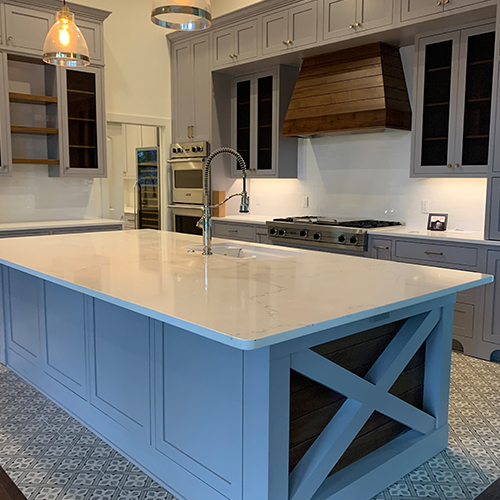
For Jacksonville homes with open-concept layouts where the kitchen island serves as a visual centerpiece, porcelain’s large-format slabs create cleaner lines. A 10-foot island in 12mm Dekton or Laminam requires only one slab with no visible seam, while the same island in quartz needs a seam near the sink or cooktop. Conversely, if you’re drawn to a specific color — say a warm cream with gold veining or a dramatic black with white marbling — quartz offers ten options for every one porcelain choice. Review samples of both materials in person; images online rarely capture the depth and variation in either surface.
Ready to compare samples in person? Contact Devenio Design at (904) 524-8240 or visit deveniocustoms.com for a free in-home consultation. We’ll bring samples to your Jacksonville home and provide detailed estimates for both materials.
Frequently Asked Questions
Is porcelain more durable than quartz for countertops?
Porcelain resists scratching, heat, and UV damage better than quartz, but quartz has superior impact resistance and is less prone to chipping during fabrication or installation. For daily kitchen use, both materials are highly durable and will last decades with proper care.
Can you repair chips or cracks in porcelain and quartz countertops?
Both materials can be repaired using color-matched epoxy or resin fillers, though repairs are more visible in porcelain due to its ceramic composition. Quartz repairs blend more seamlessly because the resin filler matches the binder in the original material. Professional repair is recommended for either surface.
Which countertop material is better for Jacksonville’s humidity?
Both porcelain and quartz are non-porous and completely unaffected by Jacksonville’s humidity, unlike natural stone which can harbor mold or mildew if improperly sealed. Either material is an excellent choice for Florida’s subtropical climate, including high-humidity bathrooms and kitchens.
Do porcelain countertops feel different than quartz?
Porcelain has a slightly harder, cooler feel similar to ceramic tile, while quartz feels warmer and slightly softer due to its resin content. The tactile difference is subtle and most homeowners adapt quickly. Visit a showroom to feel both materials before deciding.
How long does it take to install porcelain or quartz countertops?
Template to installation takes 2-3 weeks for either material in Jacksonville. The fabrication process is similar — we template your space, cut and polish the slabs in our shop, then install in one day. Complex layouts with multiple cutouts or decorative edges may add 3-5 days to the timeline.
Still not sure which material fits your lifestyle? Schedule a free consultation with Devenio Design to see full-size samples and discuss your specific kitchen layout. Call (904) 524-8240 or request a virtual estimate online — we serve all of Jacksonville, Ponte Vedra, Nocatee, and surrounding areas.
Written by Edwina Autrey — Owner & Founder, Devenio Design | Custom Countertop Fabricator, Jacksonville FL | 10+ Years in Construction & Surface Fabrication. Updated January 2026.
References
- The Tile Council of North America. Porcelain Tile Certification. https://www.tcnatile.com/
- Natural Stone Institute. Engineered Stone Product Guide. https://www.naturalstoneinstitute.org/
- HomeAdvisor. Countertop Installation Cost Guide 2024. https://www.homeadvisor.com/cost/kitchens/install-countertops/
- Underwriters Laboratories. UL 710 Standard for Exhaust Hoods and Surface Materials. https://www.ul.com/
- American Society for Testing and Materials. ASTM G154 – UV Resistance Testing Standards. https://www.astm.org/
- National Kitchen & Bath Association. Surface Care and Maintenance Guidelines. https://nkba.org/
- Marble Institute of America. Dimension Stone Design Manual. https://www.marble-institute.com/