Dekton vs Quartz Countertops: Differences & Guide
Dekton and quartz are both engineered surfaces, but Dekton is sintered stone (compressed minerals fired at extreme heat) while quartz is resin-bound crushed stone. The key difference: Dekton handles UV exposure and heat without damage, making it ideal for outdoor kitchens and Florida’s intense sun, while quartz offers more patterns and lower cost but must stay indoors.[1] We fabricate and install both materials daily in Jacksonville, and each has distinct advantages depending on your project.
What Is Dekton and How Is It Made?
Dekton is an ultra-compact sintered stone manufactured by Cosentino through a process called TSP (Technology of Sintered Particles). Raw materials—porcelain, glass, and quartz oxides—are compressed under 25,000 tons of pressure and fired at 1200°C, replicating metamorphic rock formation in nature but accelerated.[2] This process creates a fully vitrified, non-porous surface with zero water absorption (0.00%).
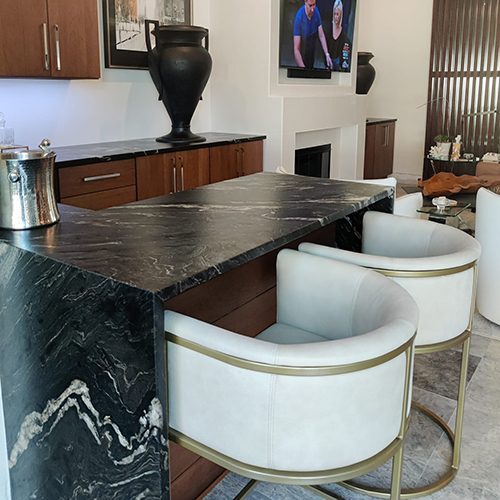
Unlike quartz countertops, Dekton contains no resins or binders. It’s 100% mineral, which explains its superior UV stability and heat resistance. The material comes in 12mm and 20mm thicknesses, and we often use the thinner slabs for waterfall edges and book-matched islands. In our Jacksonville shop, we’ve noticed Dekton’s color consistency between batches is excellent—critical for large island projects where you need multiple slabs to match perfectly.
How Does Quartz Countertop Manufacturing Differ?
Quartz countertops are engineered surfaces composed of 90-95% ground natural quartz bound with 5-10% polymer resins and pigments. Brands like Caesarstone, Cambria, and Silestone crush quartz crystals, mix them with polyester or epoxy resins, then vibro-compact and cure the mixture under vacuum.[3] The resin binder allows for intricate veining patterns and color variations that mimic natural marble or granite.
This manufacturing method creates a non-porous surface (but not zero-absorption like Dekton), making quartz highly stain-resistant for everyday use. The polymer content, however, limits heat tolerance and UV exposure. We’ve seen quartz discolor in sunrooms with south-facing windows in Ponte Vedra Beach homes, and hot pans above 300°F can scorch the resin. For custom kitchen interiors without direct sun, quartz performs beautifully and costs 20-30% less than Dekton.
Dekton vs Quartz: Head-to-Head Performance Comparison
Dekton outperforms quartz in heat resistance, UV stability, and scratch resistance, while quartz offers better value and pattern variety. The table below summarizes key differences we reference when consulting with clients:
| Property | Dekton | Quartz |
|---|---|---|
| Cost per sq. ft. installed | $85–$125 | $65–$95 |
| UV Resistance | Colorfast, no fading | Can discolor outdoors |
| Heat Resistance | Withstands 1000°C+ | ~300°F limit |
| Scratch Resistance | Mohs 7+ (very hard) | Mohs 7 (hard) |
| Maintenance | Soap and water | Soap and water |
| Outdoor Use | Fully rated | Indoor only |
| Warranty | 25-year transferable | 10-15 year limited |
Both materials are non-porous and resist staining from wine, coffee, or citrus. Dekton’s sintered structure makes it slightly more brittle during fabrication—edge chips require immediate repair—but once installed with proper support, it’s extremely durable.[4]
Is Dekton Better Than Quartz for Outdoor Kitchens in Florida?
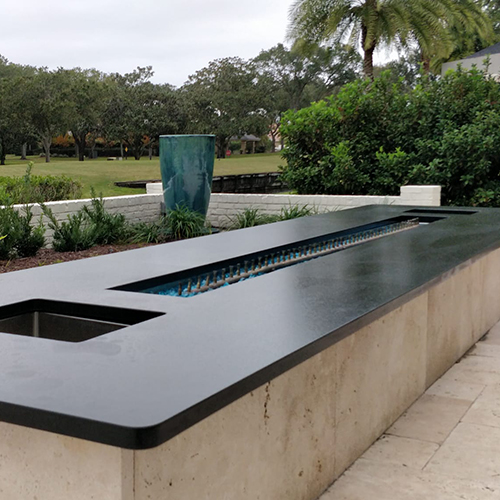
Yes, Dekton is the superior choice for outdoor kitchens, pool bars, and covered patios in Florida because it tolerates UV exposure and temperature swings without fading or warping. We’ve installed Dekton countertops in Riverside and San Marco outdoor living spaces that endure July afternoon sun hitting 95°F, then cooling to 70°F overnight with zero surface damage.[5]
Quartz manufacturers explicitly void warranties for outdoor installations. The polymer resins break down under UV light, causing yellowing or bleaching within 6-12 months. Florida’s humidity and heat accelerate this degradation. If your project includes a grill surround, pizza oven, or open-air bar, specify Dekton. For enclosed sunrooms or three-season porches with shade, quartz may work if you confirm UV-blocking window film is installed.
Considering an outdoor kitchen upgrade? Contact Devenio Design for a free estimate at (904) 524-8240 or visit deveniocustoms.com. We offer in-person consultations and virtual estimating for Jacksonville-area projects.
What Are the Pros and Cons of Dekton Countertops?
Dekton pros: unmatched UV and heat resistance, zero water absorption, scratch resistance, and suitability for indoor and outdoor use. The material’s color runs through the full thickness, so edge details and mitered corners show consistent veining. We fabricate Dekton with diamond blades and achieve crisp mitres on waterfall edges that stay sharp for years.[6]
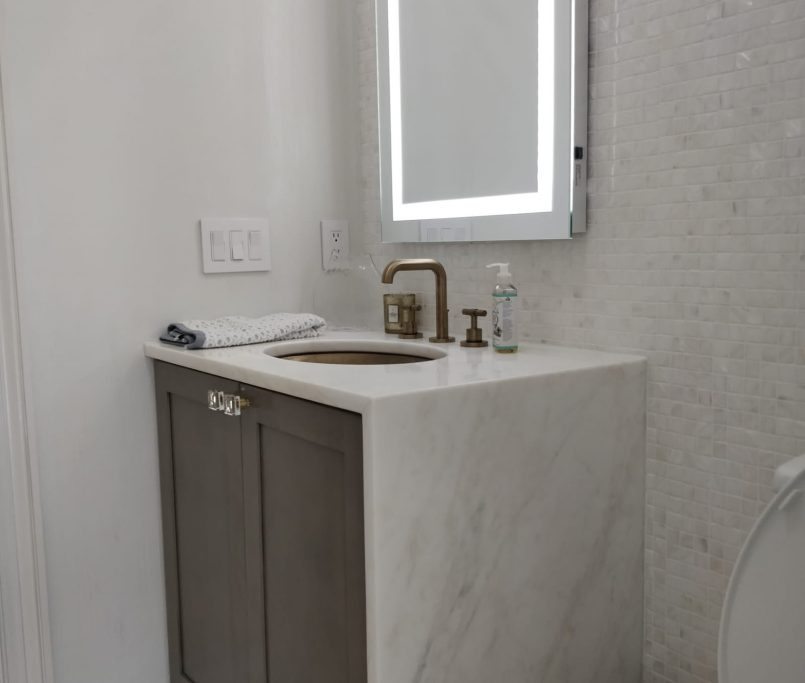
Dekton cons: higher upfront cost ($85-$125 per square foot installed vs. $65-$95 for quartz), more limited color range (roughly 40 colors vs. hundreds of quartz patterns), and brittleness during fabrication. Dekton requires experienced fabricators—improper handling during cutting or transport can cause edge chips. The material also telegraphs substrate imperfections, so cabinetry must be perfectly level. In our custom bathroom vanity projects, we always check cabinet levelness before templating Dekton.
When Should You Choose Quartz Over Dekton?
Choose quartz when budget is a priority, you want maximum pattern variety, or the installation is strictly indoors without high-heat exposure. Quartz offers marble lookalikes, concrete finishes, and bold veining at a lower price point. For kitchen islands, perimeter counters, and bathroom vanities in climate-controlled spaces, quartz delivers excellent performance and aesthetic flexibility.[7]
Quartz is also more forgiving during fabrication, with lower chip risk at edges and cutouts. If you’re renovating a rental property or spec home where cost per square foot matters, quartz provides a high-end look without Dekton’s premium. We often recommend quartz for projects where homeowners plan to sell within 5-7 years and want to maximize ROI. For forever homes with outdoor living spaces, Dekton’s longevity and versatility justify the investment.
Ready to select the right countertop for your Jacksonville home? Call Devenio Design at (904) 524-8240 or request a quote at deveniocustoms.com. We guide you through material selection, templating, and installation with 10+ years of fabrication expertise.
Frequently Asked Questions
Is Dekton worth the extra cost over quartz?
Dekton is worth the 20-30% premium if your project includes outdoor surfaces, high-heat cooking areas, or you want a 25-year warranty. For standard indoor kitchens without sun exposure, quartz offers comparable performance at lower cost.
Can Dekton be used outdoors in Florida?
Yes, Dekton is fully rated for outdoor use in Florida. Its UV-stable pigments and zero water absorption handle intense sun, humidity, and temperature swings without fading or warping. Quartz cannot be used outdoors.
Does Dekton crack more easily than quartz?
Dekton is slightly more brittle during fabrication but equally durable once installed with proper cabinet support. Both materials require 3/4-inch plywood substrate and support near cutouts and overhangs to prevent cracking.
Which material is easier to maintain?
Both Dekton and quartz require only soap and water for daily cleaning. Neither needs sealing. Dekton resists heat and scratches slightly better, but both are highly stain-resistant and low-maintenance.
Can I put hot pans directly on Dekton or quartz?
You can place hot pans directly on Dekton without damage—it tolerates over 1000°C. Quartz can scorch at 300°F, so always use trivets or hot pads with quartz countertops to avoid resin burns.
Written by Edwina Autrey—Owner & Founder, Devenio Design | Custom Countertop Fabricator, Jacksonville FL | 10+ Years in Construction & Surface Fabrication. Updated April 2026.
References
- Cosentino. Dekton Technical Information. https://www.cosentino.com/usa/dekton/
- National Institute of Standards and Technology. Sintered Stone Manufacturing Process. https://www.nist.gov/
- Natural Stone Institute. Engineered Stone Standards. https://www.naturalstoneinstitute.org/
- American Society for Testing and Materials. ASTM C1526 – Standard Specification for Serpentine Dimension Stone. https://www.astm.org/
- University of Florida IFAS Extension. Outdoor Kitchen Material Selection for Florida Climate. https://edis.ifas.ufl.edu/
- Marble Institute of America. Best Practices for Ultra-Compact Surface Fabrication. https://www.marble-institute.com/
- National Kitchen & Bath Association. Countertop Material Comparison Study. https://nkba.org/